
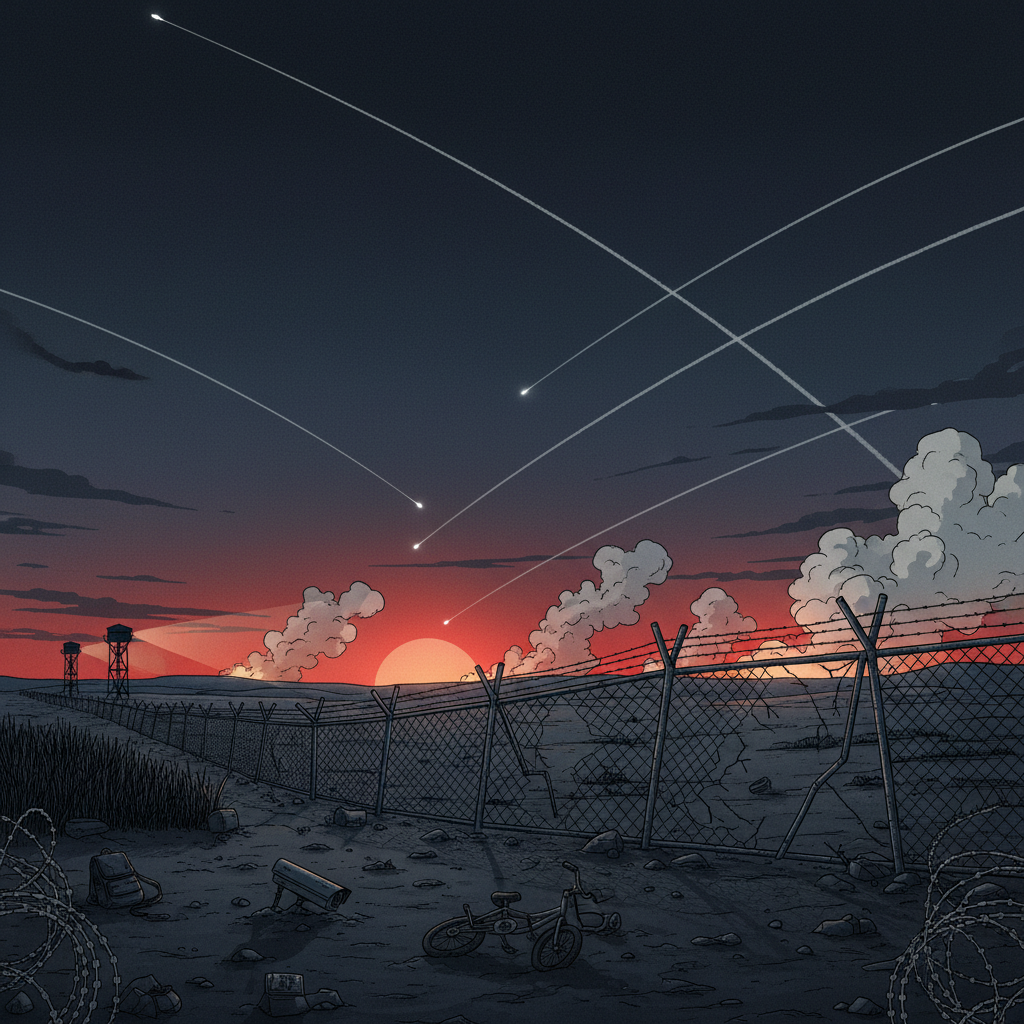
هجوم حماس في 7 أكتوبر
On October 7, 2023, حماس launched a surprise multi-front assault on southern Israel from the Gaza Strip, killing approximately 1,200 people and taking over 250 hostages. The attack triggered Israel's largest military operation in Gaza since 1948, a broader regional escalation involving حزب الله and Iran, and ultimately contributed to the US-Israel strikes on Iran in February-March 2026. The event represents a catalyst whose causal chain extends from the immediate attack through the Gaza war, regional proxy conflict, and into the reshaping of the Middle Eastern security architecture.
الملخص التنفيذي
Seven lenses converge on a central finding: October 7 was a catalyst event whose consequences far exceeded the intentions of any single actor, triggering an escalation chain that reshaped the Middle Eastern security architecture. Intelligence lenses (regional-intelligence, CIA) identify a systemic analytical failure rooted in technological hubris. The proxy-warfare lens reveals how حماس's autonomous action within Iran's proxy framework ultimately destroyed the very proxy doctrine it exemplified. Civilian-impact documents a humanitarian catastrophe of historic proportions on both sides, with radically asymmetric scale. Game-theory exposes the escalation trap where each player's rational response drove the system toward collective catastrophe. Machiavelli strips away stated justifications to reveal the gap between declared and actual objectives for all parties. Nietzsche diagnoses the psychological dynamics of ressentiment (الضغينة) and will to power (إرادة القوة) that underpin the conflict's intensity. Together, these perspectives reveal October 7 not as an isolated attack but as the moment when decades of unresolved tension, strategic miscalculation, and human suffering converged into a rupture whose consequences -- extending through Gaza's destruction, حزب الله's degradation, and the US-Iran 2026 strikes -- continue to unfold.
الحقائق الرئيسية
حقائق موثقة من بحث متعدد المصادر، مصنفة حسب مستوى الثقة
حماس launched عملية طوفان الأقصى on October 7, 2023, breaching the Gaza-Israel barrier at multiple points with approximately 3,000 militants.
ثقة highApproximately 1,200 people were killed in Israel on October 7, including 364 at the Nova music festival, approximately 695 Israeli civilians, 373 security forces, and 71 foreign nationals.
ثقة highOver 250 hostages were taken to Gaza, including Israeli soldiers, civilians, and foreign nationals.
ثقة highIsrael launched Operation Swords of Iron on October 8, 2023, beginning an intensive aerial bombardment campaign followed by a ground invasion of northern Gaza on October 27.
ثقة highThe ICC issued arrest warrants for Israeli PM Netanyahu and حماس leader Yahya Sinwar (and others) for alleged war crimes and crimes against humanity.
ثقة highThe ICJ ordered provisional measures in South Africa's genocide case against Israel, ruling that Palestinians in Gaza have plausible rights under the Genocide Convention that needed protection.
ثقة highحزب الله began cross-border attacks on Israel on October 8, 2023, opening a second front in solidarity with حماس, escalating to a full-scale conflict by late 2024.
ثقة highالفاعلون الرئيسيون
الفاعلون الرئيسيون المشاركون في هذا الحدث مع أفعالهم ومصالحهم المعلنة
حماس (كتائب عز الدين القسام)
organization- ›Launched coordinated multi-front assault on southern Israel
- ›Breached Gaza-Israel barrier at 30+ points
- ›Attacked military bases, kibbutzim, and Nova music festival
Israel (Government and الجيش الإسرائيلي)
state- ›Declared war and mobilized 360,000 reservists
- ›Launched Operation Swords of Iron air campaign
- ›Imposed total siege on Gaza (fuel, electricity, water, food)
Iran / الحرس الثوري الإسلامي
state- ›Provided long-term strategic and financial support to حماس
- ›Supplied weapons technology and training through فيلق القدس التابع للحرس الثوري
- ›Coordinated محور المقاومة response across multiple fronts
حزب الله
organization- ›Opened second front with cross-border attacks on northern Israel
- ›Launched rockets and anti-tank missiles at Israeli positions
- ›Escalated to major conflict by late 2024
United States
state- ›Deployed two carrier strike groups to Eastern Mediterranean
- ›Provided emergency military aid packages to Israel
- ›Vetoed multiple UN Security Council ceasefire resolutions
البحث والمصادر
الجدول الزمني للحدث
2023-10-07 to ongoing (2026-03-15)
التحليل السببي
رسم بياني تفاعلي يوضح كيف ترتبط السياسات والفاعلون والأحداث سببيًا — انقر على العقد لاستكشاف العلاقات
الشبكة السببية
17 عقدة · 16 اتصال
اختر عقدة
انقر على أي عقدة في الرسم البياني لاستكشاف اتصالاتها ومنظورات العدسات
الأسباب الجذرية
4المسار الحرج
9 خطواتتحليلات العدسات
تقدم كل عدسة إطارًا تحليليًا فريدًا — انقر للتوسيع والاطلاع على التحليل المعمّق
منظور الاستخبارات الإقليمية
regional-intelligenceOctober 7 represents a textbook case of intelligence failure driven by analytical hubris -- the belief that technological superiority and economic leverage had permanently deterred حماس. The failure was not primarily one of collection (indicators existed) but of analysis and institutional culture, where a dominant framework became unfalsifiable. The most significant intelligence lesson is that a disciplined adversary willing to accept the costs of low-tech communication can defeat the world's most sophisticated SIGINT apparatus.
الحرب بالوكالة وعقيدة الفاعلين من غير الدول
proxy-warfareOctober 7 exposed the central paradox of proxy warfare: proxies are valued for their operational autonomy and deniability, but that same autonomy means they can drag their patron into conflicts the proxy strategy was designed to prevent. Iran built the most sophisticated state-sponsored proxy network in modern history, only to see it become the mechanism through which Iran was drawn into direct military confrontation with the US and Israel -- the very outcome four decades of proxy doctrine was designed to avoid.
تحليل التأثير على السكان المدنيين
civilian-impactThe civilian impact of October 7 and the subsequent Gaza operation is characterized by radical asymmetry in scale alongside shared human suffering. While October 7 inflicted devastating, concentrated violence on Israeli communities in a single day, the sustained military operation in Gaza has produced civilian casualties, displacement, and infrastructure destruction at a scale that multiple UN agencies describe as unprecedented in modern conflict. The population-level data -- regardless of which source's figures one accepts -- describes a humanitarian catastrophe whose demographic, psychological, and economic consequences will shape the region for a generation.
تقييم الاستخبارات الاستراتيجية CIA
Western InstitutionalciaFrom a US strategic intelligence perspective, October 7 triggered the most consequential unplanned escalation chain since 9/11. The CIA's analytical frameworks correctly identified the escalation dynamics -- proxy degradation leading to nuclear hedging leading to preventive strikes -- but the political environment constrained the policy options for interrupting this chain. The key intelligence lesson is that a single dramatic event can collapse carefully constructed strategic frameworks (normalization, containment) faster than they can be rebuilt.
تحليل نظرية الألعاب
Western Moderngame-theoryGame theory reveals October 7 as a rational (if catastrophic) move within حماس's strategic calculus: the pre-existing equilibrium was deteriorating for Palestinian interests, Israel's deterrence model had created exploitable overconfidence, and the expected payoff of dramatic disruption exceeded continued marginalization. The resulting escalation trap -- where each player's rational response to the previous move drives the system toward collective catastrophe -- demonstrates why the most dangerous moments in international security arise when multiple players simultaneously face commitment traps that foreclose de-escalation.
تحليل القوة الماكيافيلي
Greco-Roman & ClassicalmachiavelliThrough a Machiavellian lens, October 7 reveals a conflict where every major actor's stated goals diverge significantly from their inferred real goals, and where the weakest actor's willingness to pay the highest price gave it disproportionate power to reshape the strategic landscape. حماس traded its physical capacity for strategic disruption; Israel traded international legitimacy for military dominance; Iran traded its proxy network for nuclear leverage; the US traded diplomatic credibility for alliance maintenance. The Prince would observe that all parties achieved something, but none achieved what they claimed to want.
تحليل نيتشوي - إرادة القوة
Western ModernnietzscheThrough Nietzsche's lens, October 7 reveals a conflict driven not by rational strategic calculation but by the collision of competing expressions of will to power (إرادة القوة) -- حماس's ressentiment (الضغينة) erupting as destructive nihilism, Israel's master morality (أخلاق السادة) reasserting dominance through overwhelming force, and both sides trapped in what Nietzsche would diagnose as reactive rather than creative expressions of will. The tragedy is that no party in this conflict is exercising will to power (إرادة القوة) in its highest form -- the creation of new values and possibilities. All are destroying, negating, reacting. The abyss has consumed every party that gazed into it.
التقاربات
حيث تصل عدسات متعددة إلى استنتاجات متشابهة — مما يشير إلى المتانة
Intelligence failure rooted in systemic analytical hubris, not collection gaps
All three lenses agree that October 7's intelligence failure was primarily analytical rather than collection-based. Warning indicators existed but were filtered through institutional frameworks that had concluded حماس was deterred. The regional-intelligence lens traces this to the 1973 'conceptzia' pattern recurring; the CIA lens identifies a broader failure of the US-Israeli intelligence partnership; game-theory shows how Israel's false model of حماس's preferences created exploitable strategic overconfidence.
The escalation chain from October 7 to US-Iran strikes was structurally predictable even if not inevitable
Four lenses converge on the assessment that the escalation from proxy attack through proxy network destruction to direct state confrontation follows a recognizable structural pattern. Proxy-warfare identifies the fundamental paradox of proxy doctrine (proxies can drag patrons into unwanted confrontation); CIA traces the strategic logic from deterrence degradation to nuclear hedging to preventive strikes; game-theory models the commitment traps that foreclosed de-escalation; Machiavelli identifies how each actor's pursuit of stated goals (which concealed real goals) drove escalation.
All actors' stated goals diverge significantly from their inferred real goals
Machiavelli and game-theory both identify systematic gaps between declared and actual objectives for all parties. حماس claimed liberation but sought اتفاقيات إبراهيم disruption and strategic repositioning. Israel claimed hostage rescue but prioritized deterrence restoration and regime survival. Iran claimed Palestinian solidarity but pursued proxy network maintenance and nuclear leverage. The US claimed stability but prioritized alliance credibility and Iran containment.
The weakest actor's willingness to accept maximum costs gave it disproportionate strategic agency
Game-theory identifies حماس's asymmetric payoff structure (strategic repositioning worth catastrophic military losses); Machiavelli notes that willingness to pay the highest price inverted conventional power dynamics; Nietzsche frames this as the explosive discharge of ressentiment (الضغينة) that temporarily reversed the master-slave dynamic. All three recognize that حماس's acceptance of devastating consequences for Gaza enabled strategic outcomes that a conventionally rational actor would not have pursued.
التوترات المثمرة
حيث تختلف العدسات — كاشفةً عن تعقيد يستحق الفحص
مستقبلات محتملة
سيناريوهات مستمدة من تحليلات العدسات — ما قد يتكشف بناءً على أطر مختلفة
Managed Post-Conflict Equilibrium
Low-medium probability (20-30%). Requires simultaneous progress on multiple intractable issues. Historical precedent (post-1973, post-Oslo) suggests partial progress followed by breakdown.
Frozen Conflict with Periodic Eruption
High probability (40-50%). Most consistent with historical patterns. The Israeli-Palestinian conflict has repeatedly entered periods of reduced violence without resolution, with each cycle producing greater devastation than the last.
Regional Realignment and Arab-Israeli Normalization
Medium probability (25-35%). The degradation of Iran's proxy network and the exhaustion of the conflict may create a window for normalization, but the depth of Palestinian suffering makes any deal that marginalizes Palestinian statehood politically toxic.
Continued Escalation and Regional War
Low probability (10-15%). The 2026 strikes have degraded Iran's conventional capabilities, but asymmetric retaliation (terrorism, cyber, proxy reconstitution) remains possible. Full regional war is unlikely given the military imbalance.
الأسئلة الرئيسية
أسئلة تظل مفتوحة بعد التحليل — للبحث المستمر
- ?What was the full extent of pre-October 7 intelligence warnings, and at what levels were they received and dismissed?
- ?What was the precise degree of Iranian foreknowledge and involvement in October 7 operational planning?
- ?What is the accurate civilian-to-combatant casualty ratio in Gaza, and can it be independently verified?
- ?What was the content of Saudi-Israeli normalization negotiations at the time of October 7?
تفاصيل تدقيق الحقائق
نتائج تدقيق الحقائق
verifiedملاحظات فوقية
No lens adequately captures the experience of the individual human beings at the center of this conflict -- the October 7 survivors, the hostage families, the children of Gaza, the soldiers on both sides. All seven lenses analyze the conflict from above or outside; none can convey what it means to live inside it. Additionally, none adequately addresses the religious dimensions that motivate many actors -- Islamic theology, Jewish historical consciousness, messianic nationalism -- which resist secular analytical frameworks.
This conflict resists reduction to any single explanatory framework because it operates simultaneously as an intelligence failure, a proxy warfare crisis, a humanitarian catastrophe, a strategic escalation chain, a power politics game, and a psychological drama of collective trauma and will to power (إرادة القوة). Any analysis that privileges one dimension necessarily distorts the whole. The seven lenses together approach but do not achieve a complete picture.
This analysis was produced by an AI system analyzing one of the most emotionally charged, politically contested, and humanly devastating events of the 21st century. The multi-perspective framing is designed to present all major viewpoints with attribution, but no analysis of this event can be truly neutral. The reader is encouraged to notice which perspectives resonate and which provoke resistance, and to treat that response as data about their own analytical framework rather than evidence of the analysis's bias.
اعثر على منظورك
تتوافق أطر مختلفة مع قراء مختلفين — اعثر على نقطة دخولك
Readers who approach conflict through strategic logic, institutional analysis, and rational actor frameworks. You likely focus on what actors could and should have done differently, and you evaluate outcomes against strategic objectives.
October 7 was a predictable consequence of Israeli analytical hubris and a rational (if extreme) strategic move by حماس. The escalation chain follows recognizable patterns from intelligence failure through commitment trap to regional confrontation.
Readers who experience this conflict through its human and psychological dimensions first. You are drawn to the suffering of civilian populations and the deeper psychological forces driving the violence. You may find purely strategic analysis emotionally unsatisfying or morally insufficient.
The conflict is driven by deep psychological forces (ressentiment (الضغينة), will to power (إرادة القوة), collective trauma) that cannot be resolved through strategic frameworks alone. The civilian cost is the central reality that all other analyses must reckon with.
Readers who understand conflict through institutional structures, alliance dynamics, and great power competition. You focus on how organizations (intelligence agencies, proxy networks, alliances) shape and constrain individual and state behavior.
October 7 was a failure of institutional structures -- intelligence organizations, proxy management doctrines, alliance mechanisms -- that had maintained a fragile status quo for decades. The institutional framework failed because it was designed for a world that the actors had already moved beyond.
Readers skeptical of stated motivations and official narratives. You suspect that all parties are pursuing unstated objectives disguised as moral imperatives, and you evaluate claims against revealed preferences rather than declared intentions.
Every major actor's stated goals diverge from their inferred real goals. The gap between stated and actual objectives -- not the objectives themselves -- is the primary driver of the conflict's intractability.
If you find yourself strongly aligned with one cluster, deliberately engage with the opposite. If you resonate with the analytical cluster's strategic logic, the intuitive cluster's focus on civilian suffering will challenge your framework in productive ways. If the institutional perspective feels natural, the Machiavellian skepticism about stated objectives will deepen your analysis. Every perspective here captures something real and misses something important.
تحليلات ذات صلة
أحداث أخرى حُللت من خلال عدسات أو فئات مشابهة
كان الربيع العربي موجة ثورية من الاحتجاجات والانتفاضات والتمردات المسلحة التي اجتاحت العالم العربي ابتداءً من ديسمبر 2010. أشعلها إحراق البائع المتجول التونسي محمد البوعزيزي لنفسه في 17 ديسمبر 2010 — في فعل يأس ضد عقود من الفساد الاستبدادي والإذلال وبطالة الشباب — وانتشرت الحركة بسرعة مذهلة عبر شمال أفريقيا والشرق الأوسط. تردد الهتاف المعرِّف "الشعب يريد إسقاط النظام" من تونس إلى القاهرة إلى بنغازي إلى دمشق. فرّ بن علي في تونس بعد 23 عاماً (14 يناير 2011)؛ وسقط مبارك في مصر بعد 30 عاماً في 18 يوماً فقط (11 فبراير 2011)؛ وأُطيح بالقذافي في ليبيا وقُتل بعد تدخل حلف الناتو (أكتوبر 2011)؛ واختار الأسد في سوريا القمع الوحشي مشعلاً حرباً أهلية قتلت أكثر من 500,000 وشردت 13 مليوناً. أثبت اختيار الجيش — الانحياز للمتظاهرين أو البقاء موالياً للنظام — أنه المتغير الحاسم في كل بلد. ضخّمت بثوث الجزيرة الفضائية ووسائل التواصل الاجتماعي العدوى، لكن الأسباب الكامنة كانت بنيوية: عقود من الركود والفساد والإذلال لجيل كامل بلا آفاق اقتصادية. وصفت وسائل الإعلام الغربية هذا بأنه صحوة ديمقراطية؛ وصاغته الممالك الخليجية كزعزعة استقرار مدعومة من الخارج؛ ووصفته الأنظمة الاستبدادية بتسلل إرهابي؛ أما المشاركون فسموه ثورة الكرامة. بعد عقد، لم تحقق سوى تونس انتقالاً ديمقراطياً. عادت مصر إلى الحكم العسكري. انهارت ليبيا كدولة فاشلة. وأصبحت سوريا أسوأ كارثة إنسانية في القرن، فولّدت داعش وأطلقت أزمة اللاجئين الأوروبية. يظل الربيع العربي أكثر الأحداث الجيوسياسية تأثيراً في عقد 2010 — قصة شجاعة استثنائية ونتائج مأساوية والسؤال الدائم: هل تستطيع الثورة تحقيق الكرامة التي تَعِد بها؟
بين 6 أبريل ب18 يوليو 1994، قُتل ما يقرب من 800,000 من التوتسي والهوتو المعتدلين بشكل ممنهج في رواندا خلال 100 يوم — أكثر عمليات القتل الجماعي كفاءة في التاريخ الحديث. لم تكن الإبادة الجماعية انفجاراً لـ«عداوات قبلية قديمة» بل كانت ذروة مشروع استعماري: صنع الإداريون البلجيكيون فئات عرقية جامدة من هويات اجتماعية مرنة من خلال تعداد 1933 وبطاقات الهوية العرقية الإلزامية. اختار نظام هابياريمانا ودائرته الداخلية akazu الإبادة الجماعية كاستراتيجية للبقاء السياسي. قامت إذاعة RTLM — «راديو الماشيتي» — بتكييف السكان بشكل ممنهج من خلال سنوات من الدعاية المهينة، واصفة التوتسي بـ«inyenzi» (الصراصير). تم اغتصاب ما بين 250,000 و500,000 امرأة كسلاح متعمد للإبادة الجماعية. فشل المجتمع الدولي لم يكن سلبياً بل إيجابياً: أرسل دالير تحذيره قبل ثلاثة أشهر، وطلب 5,000 جندي، ورُفض. خفض مجلس الأمن UNAMIR من 2,500 إلى 270 جندياً أثناء الإبادة. أنهى انتصار الجبهة الوطنية الرواندية الإبادة في يوليو 1994، لكن التداعيات امتدت إلى حرب الكونغو الأولى (1996-97) و«حرب أفريقيا العالمية» التي قتلت أكثر من 5 ملايين شخص.
في 26 أبريل 1986، الساعة 01:23 صباحاً، انفجر المفاعل رقم 4 في محطة تشيرنوبيل للطاقة النووية في جمهورية أوكرانيا السوفيتية أثناء اختبار السلامة، مطلقاً مواد مشعة تفوق 400 مرة ما أطلقته قنبلة هيروشيما. أخفت السلطات السوفيتية الكارثة في البداية، مجبرةً 49,000 من سكان بريبيات على مواصلة حياتهم الطبيعية لمدة 36 ساعة قبل الإخلاء. تم نشر نحو 600,000 من 'المصفّين' لاحتواء الكارثة. تتراوح تقديرات الوفيات من 4,000 (منظمة الصحة العالمية) إلى 93,000 (غرينبيس). حطمت الكارثة أسطورة التفوق التكنولوجي السوفيتي وأجبرت غورباتشوف على الغلاسنوست.
كيف تم تحليل هذا
شفافية كاملة حول عملية التحليل والأدوات والقيود
Crosslight Engine
v0.4.0 "Global Lens Expansion"- ⚠Non-Western philosophical lenses rely on translated primary texts — nuance may be lost in translation
- ⚠Some traditions (e.g., Maat, Ubuntu) have limited surviving primary texts; analysis draws on scholarly reconstruction
- ⚠Cross-cultural lens application is inherently interpretive — a Confucian reading of a Western event is an analytical exercise, not a claim of cultural authority
إحصائيات التحليل
المنهجية
أُنتج هذا التحليل بواسطة خط أنابيب Crosslight متعدد الوكلاء: وكيل بحث جمع وتحقق من الحقائق من مصادر متعددة، ووكلاء عدسات متخصصون طبّقوا أطرًا تحليلية متميزة، ووكيل تركيب دمج الرؤى وحدد الأنماط، ووكيل تدقيق حقائق تحقق من الادعاءات. كل منظور عدسة هو تفسير الذكاء الاصطناعي — وليس تأييدًا مؤسسيًا.اعرف المزيد →