The 2010 FIFA World Cup: Africa's First World Cup
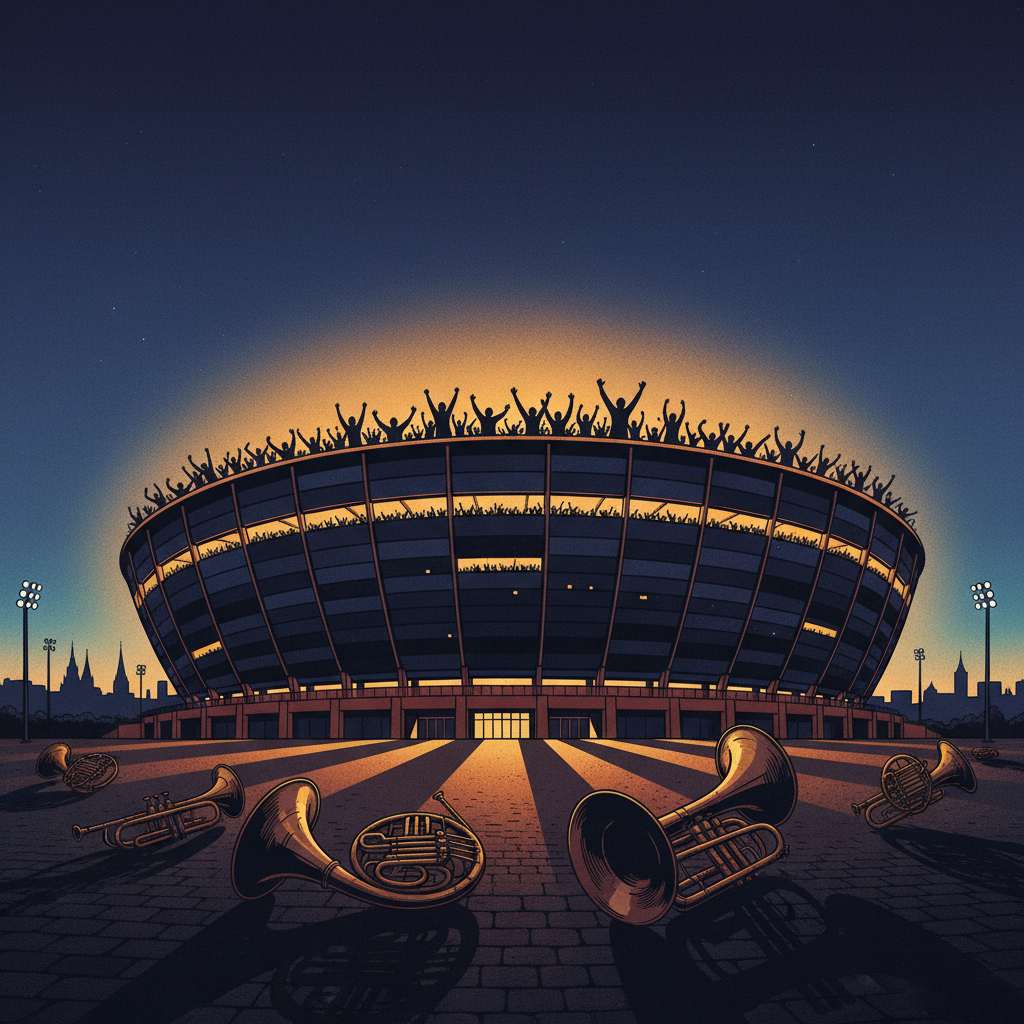
The 2010 FIFA World Cup, held in South Africa from June 11 to July 11, 2010, was the first FIFA World Cup hosted on the African continent. Awarded to South Africa in 2004, the tournament represented a milestone for African sport and post-apartheid nation-building. Spain won the final 1-0 over the Netherlands with Andres Iniesta's extra-time goal. The tournament injected approximately $2.8 billion into South Africa's economy but also raised questions about legacy infrastructure costs, displacement of communities for stadium construction, and whether the benefits reached ordinary South Africans. The vuvuzela became the tournament's sonic signature, dividing global opinion. Host nation South Africa was eliminated in the group stage, the first host to fail to advance past the first round.
Executive Summary
The 2010 FIFA World Cup in South Africa was Africa's first World Cup and a milestone in global sport, but six diverse analytical lenses converge on a troubling finding: the tournament's costs fell disproportionately on those least able to bear them while its benefits flowed disproportionately to those who already had the most. Ubuntu ethics reveal that communal joy was real but the extractive economics violated reciprocal obligation. Global football analysis exposes FIFA's hegemonic commercial model reproducing center-periphery dynamics. Ibn Khaldun warns that the monumental expenditure may have accelerated rather than strengthened national solidarity. Stoic philosophy identifies a confusion of preferred indifferents (prestige) with genuine goods (citizen welfare). Gramscian analysis reveals a historic bloc of FIFA, government, and construction interests manufacturing consent through the 'Africa's time' ideology. Game theory confirms the winner's curse: South Africa systematically overpaid for the privilege of hosting. Yet across all lenses, one truth persists: the organizational achievement was real, the communal experience was genuine, and the moment of African pride was not manufactured. The question is whether those intangible benefits justified the tangible costs.
Key Facts
Verified facts from multi-source research, scored by confidence level
South Africa was awarded the 2010 FIFA World Cup hosting rights on May 15, 2004, defeating Morocco in the final vote 14-10.
high confidenceThe tournament cost South Africa approximately $3.9 billion in infrastructure spending, including $1.3 billion on stadium construction and renovation.
high confidenceSpain defeated the Netherlands 1-0 in the final on July 11, 2010, with Andres Iniesta scoring in the 116th minute.
high confidenceSouth Africa became the first host nation eliminated in the group stage of a FIFA World Cup.
high confidenceThe World Cup injected an estimated $2.8 billion into South Africa's economy and created approximately 159,000 jobs according to Grant Thornton.
medium confidenceAt least 2 workers died during the construction of stadiums for the tournament, with labor unions reporting unsafe conditions.
medium confidenceOver 20,000 people were displaced from their homes to make way for World Cup infrastructure projects.
medium confidenceKey Actors
Major actors involved in this event with their actions and stated interests
FIFA
organization- ›Awarded hosting rights
- ›Required stadium standards
- ›Controlled commercial rights
South African Government
state- ›Invested $3.9 billion in infrastructure
- ›Provided security guarantees
- ›Facilitated land acquisitions
Research & Sources
Event Timeline
2010-06-11 to 2010-07-11
Lens Analyses
Each lens provides a unique analytical framework — click to expand for deep analysis
Ubuntu Communitarian Ethics
AfricanubuntuThe 2010 World Cup was ubuntu's greatest test and partial failure: it generated authentic communal joy across racial lines, proving that shared experience can bridge division, but the extractive economics of FIFA's model meant the costs fell disproportionately on those least able to bear them -- violating ubuntu's core demand that the community's weakest members be strengthened, not sacrificed, by collective action.
Global Football Analysis
Entertainment & Sportsglobal-footballThe 2010 World Cup proved that Africa could organize football's biggest event to the highest standard, but it also exposed the fundamental inequality in global football's economic model: FIFA extracts hosting fees and commercial rights from developing nations while directing the majority of revenues to established football markets, reproducing the center-periphery dynamics that football supposedly transcends.
Ibn Khaldun / Civilizational Analysis
Islamic & Middle Easternibn-khaldunThe 2010 World Cup was South Africa's hadara moment -- the point where a young nation's asabiyyah was strong enough to undertake a monumental project but where the project itself, by consuming resources that should have strengthened communal bonds, began the erosion of the very solidarity that made it possible. Ibn Khaldun would note that this is not unique to South Africa; it is the recurring pattern of civilizations that confuse prestige with strength.
Stoic Analysis
Greco-Roman & ClassicalstoicThe Stoic lens reveals the 2010 World Cup as a case study in the confusion of preferred indifferents (international prestige, sporting glory) with genuine goods (citizen welfare, sustainable infrastructure). South Africa exercised genuine virtue in its organizational excellence but failed the deeper Stoic test of rational self-governance by building for FIFA's approval rather than its citizens' needs.
Gramscian Analysis
Western ModerngramsciThe 2010 World Cup reveals FIFA's hegemonic power in its purest form: the ability to convince a developing nation that spending $3.9 billion to host a month-long tournament organized for the benefit of European broadcasting markets represents 'Africa's time' rather than Africa's extraction. The counter-hegemonic moment comes when the stadiums empty and the bills arrive.
Game Theory
Western Moderngame-theoryThe 2010 World Cup exemplifies a near-perfect winner's curse in action: South Africa 'won' the bid but paid a systematically higher price than the rational expected value of hosting, driven by the monopoly power of FIFA, the one-shot nature of the game, information asymmetry about true costs, and the political rather than economic nature of the decision to bid.
Convergences
Where multiple lenses reach similar conclusions — suggesting robustness
Extractive economics masked by celebratory rhetoric
Four lenses independently identify the same dynamic: the costs of hosting fell on South African taxpayers and displaced communities while the commercial benefits flowed to FIFA and its corporate partners. Each lens uses different terminology -- ubuntu calls it violation of reciprocal obligation, Gramsci calls it hegemonic extraction, game theory calls it winner's curse, global football calls it sportswashing -- but the structural observation is identical.
Genuine communal experience alongside structural exploitation
Three lenses acknowledge that the World Cup created authentic moments of national unity and pride. Ubuntu recognizes genuine communal joy, Stoicism acknowledges organizational virtue, and Ibn Khaldun identifies real (if temporary) asabiyyah strengthening. This prevents the analysis from becoming purely cynical.
Productive Tensions
Where lenses disagree — revealing complexity worth examining
Possible Futures
Scenarios derived from lens analyses — what might unfold based on different frameworks
Mega-event reform: future hosts negotiate cost-sharing with FIFA
Moderate: the 2030 co-hosting model suggests movement in this direction, but FIFA's monopoly power remains formidable
South Africa's stadiums find sustainable second lives
Low: current trends show declining utilization and mounting maintenance costs
Key Questions
Questions that remain open after analysis — for continued inquiry
- ?What is the current utilization rate of the 10 World Cup stadiums?
- ?How much has South Africa spent on stadium maintenance since 2010?
- ?Did tourism to South Africa increase sustainably after the World Cup?
Fact Check Details
Fact Check Results
verifiedMeta Observations
No lens adequately addresses the environmental impact of stadium construction, the psychological effects of displacement on communities, or the gendered dimensions of football culture and mega-event labor.
The 2010 World Cup was simultaneously Africa's proudest sporting moment, a case study in mega-event exploitation, a genuine source of communal joy, and a fiscal burden on a developing nation. These truths coexist without resolution.
We should resist the temptation to declare the World Cup either a triumph or a tragedy. Every lens captures something real; no lens captures everything. The most honest assessment holds multiple truths in tension.
Find Your Perspective
Different frameworks resonate with different readers — find your entry point
Readers who focus on structural dynamics, power asymmetries, and institutional incentives. You see systems and strategies where others see celebrations and ceremonies.
FIFA's monopoly power creates systematically unfair terms for host nations. The winner's curse ensures hosts overpay. The commercial model extracts value from the periphery for the center.
Readers who prioritize relationships, community wellbeing, and collective experience. You feel the joy of the tournament while sensing the pain beneath it.
The communal experience was real and valuable. But ubuntu demands that celebration not come at the cost of the most vulnerable. The sawubona test -- who was truly seen? -- reveals who was left behind.
Readers who think about civilizational patterns, institutional virtue, and long-term consequences. You see the World Cup in the context of South Africa's arc as a young democracy.
South Africa demonstrated organizational excellence (virtue) but confused external validation with genuine strength. The asabiyyah that enabled hosting may have been consumed by the hosting itself.
Readers who question dominant narratives and look for who benefits from the 'common sense' view. You see ideology where others see celebration.
The 'Africa's time' narrative was manufactured consent that suppressed critical examination. FIFA's hegemony operates through the voluntary reproduction of its authority by host nations.
If you resonate with the analytical cluster, read ubuntu to understand what numbers miss. If you resonate with ubuntu, read Gramsci to understand why good feelings can coexist with exploitation. If you resonate with Gramsci, read Stoicism to avoid reducing everything to false consciousness.
Related Analyses
Other events analyzed through similar lenses or categories
The 1995 Rugby World Cup Final at Ellis Park, Johannesburg on June 24, 1995, where Nelson Mandela wore a Springbok jersey to present the Webb Ellis Cup to captain Francois Pienaar after South Africa's 15-12 victory over New Zealand. This event—South Africa's first major international sporting event after apartheid—became one of history's most powerful symbols of reconciliation, transforming the Springbok from a hated emblem of white oppression into a unifying national symbol virtually overnight.
The emergence of SARS-CoV-2 in late 2019, its global spread, varying governmental responses, vaccine development and distribution, economic impacts, and resulting societal changes.
On April 16, 2014, the South Korean ferry MV Sewol capsized and sank while en route from Incheon to Jeju Island, killing 304 of the 476 people on board. Among the dead were 250 students from Danwon High School in Ansan, aged 16-17, on a school field trip. The disaster exposed systemic failures in South Korea's maritime safety regime: the vessel had been illegally modified to carry more passengers and cargo, was loaded to more than twice its legal cargo limit, and its crew abandoned ship while repeatedly instructing passengers to stay in their cabins. President Park Geun-hye's unexplained seven-hour absence during the critical early hours became a major political scandal contributing to her impeachment in 2017. The Sewol disaster became a symbol of institutional failure in South Korea.
How This Was Analyzed
Full transparency about the analysis process, tools, and limitations
Crosslight Engine
v0.3.1 "Arena & Stage"- ⚠Entertainment/sports lenses reflect domain stereotypes for analytical color, not endorsement
- ⚠Celebrity and sports events have limited 'ground truth' - analysis is inherently interpretive
- ⚠Hot take and tabloid personas are satirical framing devices for accessible analysis
Analysis Statistics
Methodology
This analysis was produced by the Crosslight multi-agent pipeline: a Research Agent gathered and verified facts from multiple sources, specialized Lens Agents applied distinct analytical frameworks, a Synthesis Agent integrated insights and identified patterns, and a Fact-Check Agent verified claims. Each lens perspective is the AI's interpretation — not institutional endorsement.Learn more →