
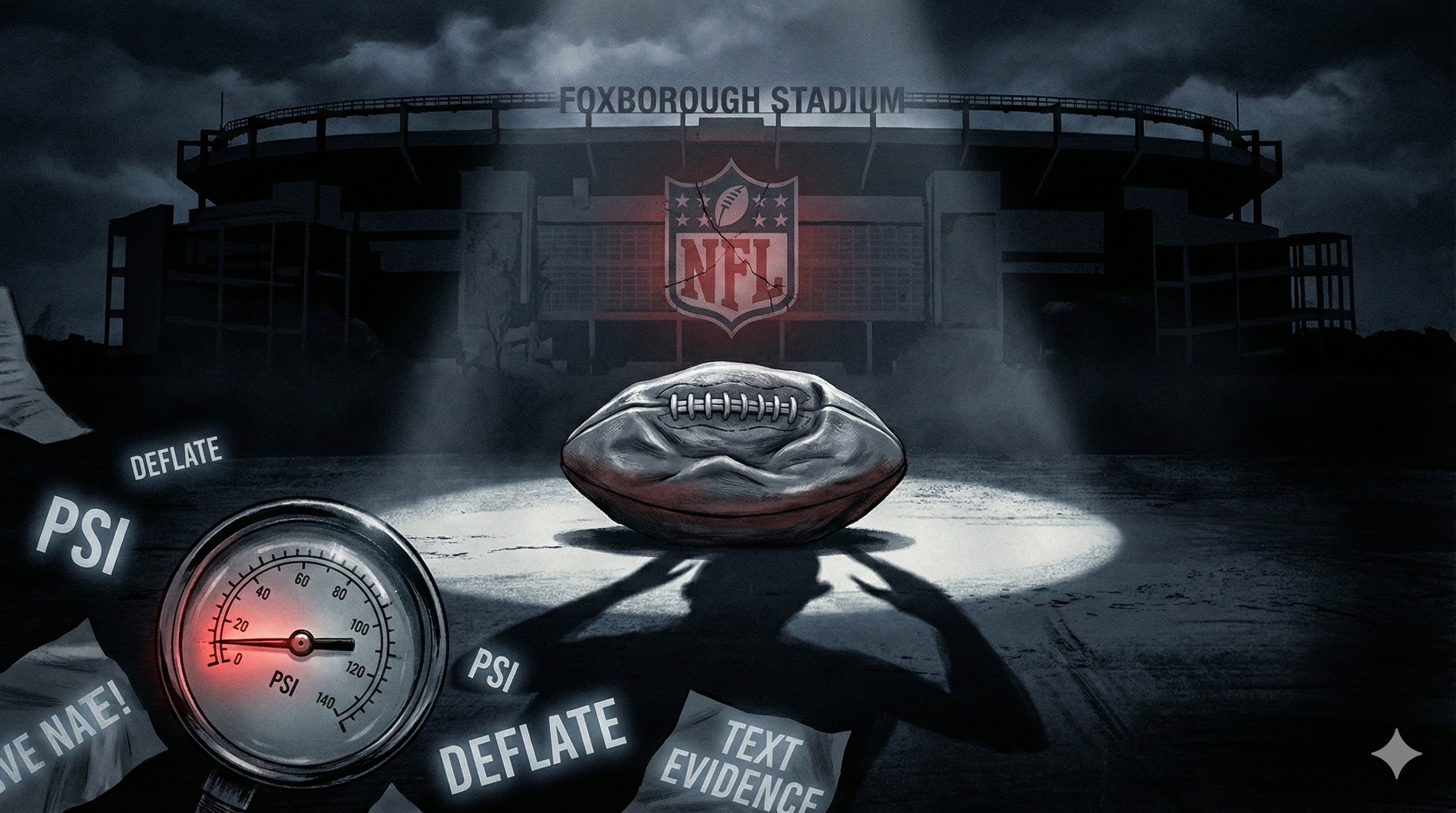
Deflategate
The 2015 NFL controversy where the New England Patriots were accused of deliberately deflating footballs, leading to Tom Brady's suspension and raising questions about NFL governance and sports integrity.
Executive Summary
The Deflategate scandal reveals a clash between institutional authority and individual rights within the unique governance structure of professional sports. All four lenses converge on the conclusion that the scandal was less about footballs than about power: the NFL's power to discipline, Brady's power to resist, and the legal system's deference to private arbitration. Game theory shows rational actors trapped in extended conflict. Machiavelli exposes the power politics beneath integrity rhetoric. Corporate analysis reveals brand management strategies on all sides. KISS cuts through to note that no definitive proof of tampering was ever produced, yet punishment was upheld anyway. The ultimate irony: Brady's suspension followed by Super Bowl victory transformed a potential legacy stain into a redemption narrative.
Listen to This Analysis
AI-generated audio documentary featuring custom character voices bringing the analysis to life
Deflategate: The Pressure Was On (Custom Voices Edition)
A sports docu-drama with unique custom voices featuring authentic Boston accents, sardonic British narration, and distinctive character personalities. All characters have custom AI-generated voices exclusive to EventDLC.
Causal Analysis
Interactive graph showing how policies, actors, and events connect causally — click nodes to explore relationships
CAUSAL NETWORK
24 nodes · 20 connections
Select a node
Click any node in the graph to explore its connections and lens perspectives
Root Causes
3Critical Path
9 stepsLens Analyses
Each lens provides a unique analytical framework — click to expand for deep analysis
Game Theory Analysis
Western Moderngame-theoryDeflategate reveals a multi-player game where each party's rational strategy led to extended conflict rather than efficient resolution. The NFL faced a principal-agent problem: how to enforce rules when the star player's cooperation was voluntary. Brady's decision to fight rather than accept punishment was rational given the reputational stakes and uncertain evidence. Goodell's decision to serve as arbitrator while maximizing punishment was rational for establishing precedent but created a credibility problem. The ultimate Nash equilibrium - Brady serves suspension but wins Super Bowl anyway - satisfied no one's first preference but represented the stable outcome given each player's constraints.
Machiavellian Power Analysis
Greco-Roman & ClassicalmachiavelliDeflategate was fundamentally a power struggle between the commissioner and the most powerful franchise in football. Goodell used the scandal to establish unchecked disciplinary authority under the CBA. The punishment's severity had little to do with footballs and everything to do with demonstrating that no player or team is above the commissioner's judgment. Brady's resistance was equally about power - refusing to submit to authority he viewed as arbitrary. The Patriots' dynasty created resentment among other owners, and Goodell may have calculated that punishing New England would satisfy the jealous majority. In the end, Goodell won the legal battle but Brady won the war of legacy.
Corporate/Business Analysis
Western ModerncorporateFrom a business perspective, Deflategate was a crisis management case study with lessons for both institutional governance and personal brand protection. The NFL prioritized demonstrating strong governance to sponsors and broadcast partners over efficient resolution. Brady's brand, worth tens of millions in endorsements, required aggressive defense regardless of legal merits. The Patriots organization faced classic corporate crisis choices: fight or settle, protect the star employee or the institution. The economic irony: the scandal generated massive media coverage that ultimately benefited NFL ratings, while Brady's redemption story (suspension followed by Super Bowl) enhanced rather than damaged his long-term brand value.
Keep It Simple, Stupid
Western ModernkissStrip away the legal complexity, scientific debates, and power politics, and Deflategate comes down to this: The NFL accused Tom Brady of cheating without definitive proof. Brady refused to accept punishment for something he said he didn't do. The NFL had the contractual authority to punish him anyway. Courts said the NFL had that authority. Brady served the suspension. Then he won another Super Bowl, making the whole thing seem pointless. The simplest lesson: sometimes the powerful can punish you whether you're guilty or not, but they can't stop you from winning afterward.
Convergences
Where multiple lenses reach similar conclusions — suggesting robustness
The scandal was about power, not footballs
All three analytical lenses conclude that the underlying stakes were commissioner authority, player rights, and institutional control - not whether PSI levels were artificially reduced.
The evidence was circumstantial and contested
No direct proof of tampering was produced. Text messages and phone destruction created suspicion but not certainty. Scientists disputed the NFL's scientific analysis.
Brady's reputation survived through performance
All lenses note that Brady's Super Bowl LI victory effectively rehabilitated his brand and redirected the narrative from cheater to persecuted champion.
The CBA structure enabled the outcome
The collective bargaining agreement's grant of broad commissioner discretion and deference to arbitration made Brady's legal position weak regardless of evidence strength.
Productive Tensions
Where lenses disagree — revealing complexity worth examining
Possible Futures
Scenarios derived from lens analyses — what might unfold based on different frameworks
CBA reforms limit commissioner discretion
Medium; future CBAs may address arbitration but owners resist limiting authority
Deflategate becomes footnote in Brady legacy
High; already occurring as Brady's championship count overshadows scandal
Key Questions
Questions that remain open after analysis — for continued inquiry
- ?What exactly did Jim McNally do in the bathroom with the footballs?
- ?What was on Tom Brady's destroyed cell phone?
- ?Which gauge did officials use for pre-game measurements?
Meta Observations
The experience of the ordinary fans who just wanted to watch football without two years of PSI debates. The human toll on the equipment staff who lost their jobs. The possibility that everyone was partly right and partly wrong.
We may never know with certainty whether balls were deliberately deflated. The physical evidence is inconclusive, the circumstantial evidence is ambiguous, and the key witnesses had incentives to shade their accounts.
Strong opinions on Deflategate often correlate with team allegiance. Patriots fans see a witch hunt; rivals see arrogant cheaters. The truth is probably more mundane and less certain than either camp admits.
Find Your Perspective
Different frameworks resonate with different readers — find your entry point
Readers who see all parties as strategic actors making calculated moves
Everyone acted rationally given incentives; extended conflict was predictable equilibrium
Readers who want the simple story without legal complexity
No proof, punishment anyway, Brady won anyway - the end
Readers who see brands, sponsors, and business interests as primary drivers
All parties managed their brands rationally; NFL protected governance image, Brady protected personal brand
Readers who see power struggles beneath stated principles
This was about commissioner authority vs. player rights, not footballs
Consider that multiple explanations can be simultaneously true: it was about power AND brands AND rational strategy AND sometimes just about footballs.
Related Analyses
Other events analyzed through similar lenses or categories
The decade-plus celebrity feud between Taylor Swift and Kanye West (with Kim Kardashian), spanning from the infamous 2009 VMA interruption through the 2016 'Famous' phone call controversy, the Reputation era, and the 2020 vindication when the full phone call leaked proving Swift had been telling the truth.
On February 18, 2001, legendary NASCAR driver Dale Earnhardt Sr. was killed in a last-lap crash at the Daytona 500. The seven-time champion's death at age 49 sent shockwaves through motorsports and led to sweeping safety reforms including mandatory HANS devices and SAFER barriers. The man who embodied NASCAR's resistance to safety equipment became the catalyst that transformed the sport forever.
On April 16, 2014, the South Korean ferry MV Sewol capsized and sank while en route from Incheon to Jeju Island, killing 304 of the 476 people on board. Among the dead were 250 students from Danwon High School in Ansan, aged 16-17, on a school field trip. The disaster exposed systemic failures in South Korea's maritime safety regime: the vessel had been illegally modified to carry more passengers and cargo, was loaded to more than twice its legal cargo limit, and its crew abandoned ship while repeatedly instructing passengers to stay in their cabins. President Park Geun-hye's unexplained seven-hour absence during the critical early hours became a major political scandal contributing to her impeachment in 2017. The Sewol disaster became a symbol of institutional failure in South Korea.
How This Was Analyzed
Full transparency about the analysis process, tools, and limitations
Crosslight Engine
v0.3.0 "Causality"- ⚠Causal attribution is inherently interpretive — graphs represent analysis, not ground truth
- ⚠Actor discovery limited by available public information and source accessibility
- ⚠Lobbying data availability varies significantly by jurisdiction
Analysis Statistics
Methodology
This analysis was produced by the Crosslight multi-agent pipeline: a Research Agent gathered and verified facts from multiple sources, specialized Lens Agents applied distinct analytical frameworks, a Synthesis Agent integrated insights and identified patterns, and a Fact-Check Agent verified claims. Each lens perspective is the AI's interpretation — not institutional endorsement.Learn more →