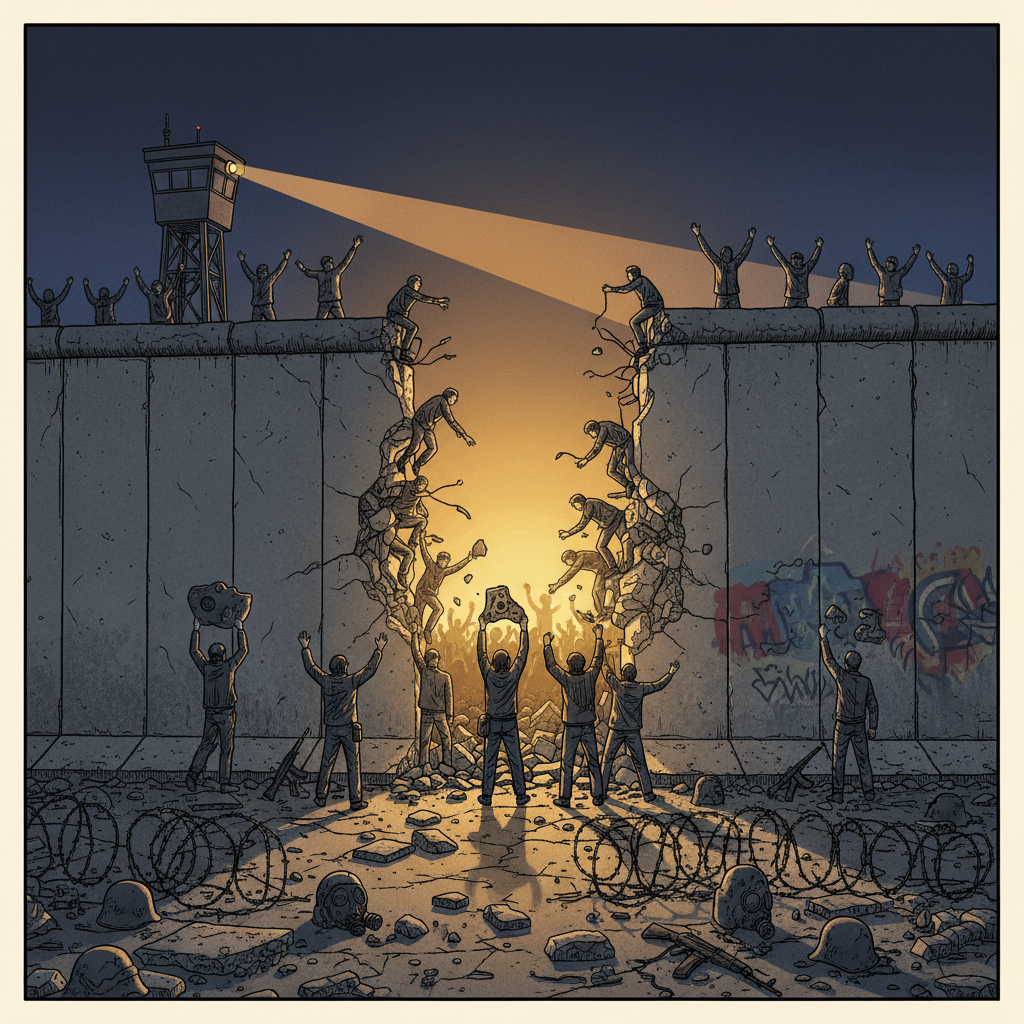
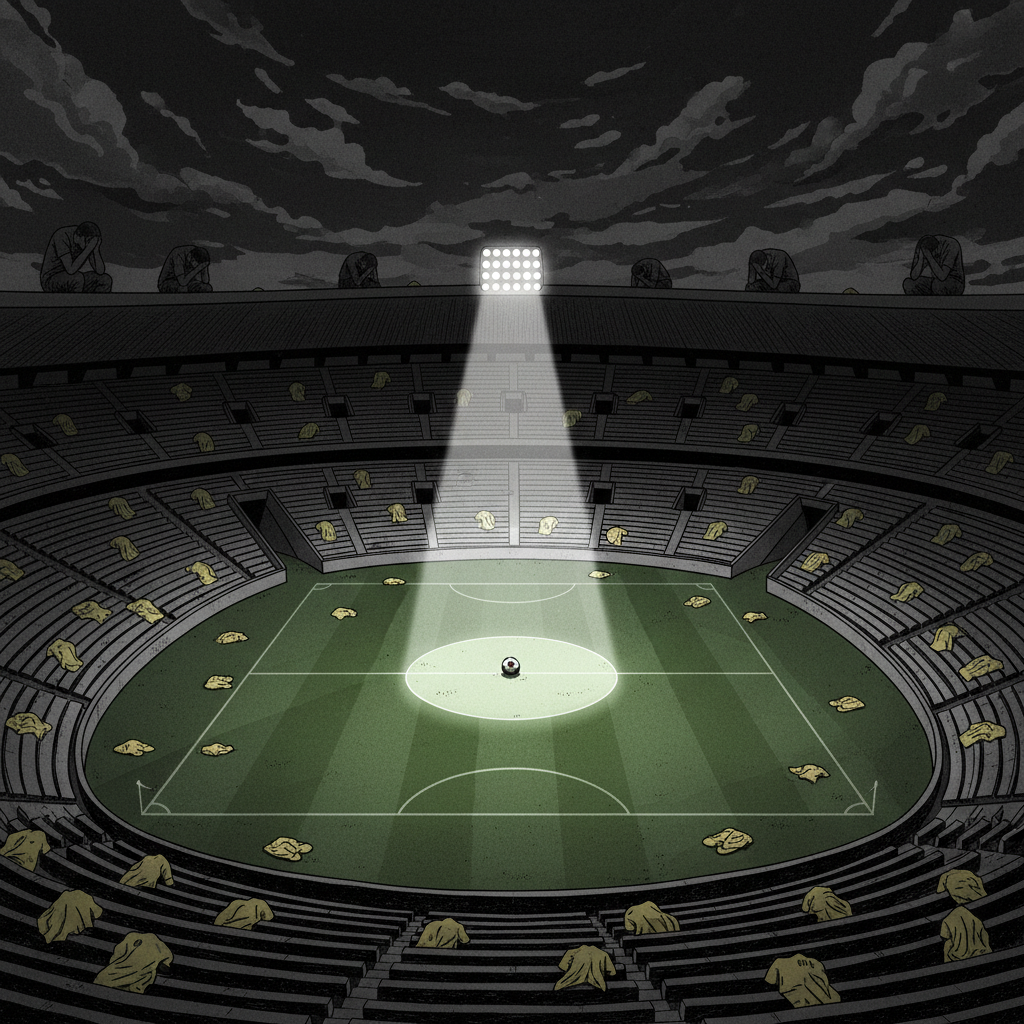
柏林墙倒塌
Five lenses converge on the fundamental insight that the Berlin Wall's fall was overdetermined — the division was unsustainable and some form of collapse was inevitable — but diverge sharply on why and how. Game theory highlights the rational calculus of cooperation replacing confrontation; Machiavelli focuses on elite agency and political opportunism; Jung reveals the psychological dimensions of division and incomplete integration; the CIA lens claims Western strategic pressure as a significant cause; and Taoism sees the Wall's fall as natural correction of artificial forcing. The most productive tension is between the CIA's triumphalism (the West won) and Taoism's inevitabilism (the Wall dissolved under its own contradictions), with the other lenses occupying the spectrum between these poles. All lenses agree on three things: Gorbachev's non-intervention was the single most critical enabling factor; the grassroots movements (Leipzig, Mauerspechte) were as important as elite decisions; and the Schabowski gaffe was the accidental catalyst that collapsed a fragile equilibrium.
视角集群
共 50 个视角Confucian, Taoist, and Zen/Chan philosophical traditions
Vedic, Buddhist, and Hindu dharmic traditions
Ubuntu communitarian ethics, Maat, and African philosophical traditions
Islamic historiography, philosophy, and Sufi traditions
Ancient Mediterranean philosophical and strategic traditions
Enlightenment and post-Enlightenment thought: psychology, strategy, epistemology
US think tanks, intelligence agencies, and policy organizations
Pop culture, celebrity, music industry, global sports, and media analysis
找到你的"核心"集群,然后探索其他集群的视角以拓宽理解。
所有分析
运作原理
48个视角
每个事件通过涵盖8大全球传统的独特知识框架进行分析——从儒家关系到博弈论,从乌班图哲学到体育分析,从禅宗探究到危机公关。
深度研究
跨全球来源的多语言研究,配有可信度评分、冲突检测和透明的引用追踪。
事实核查
每项分析都经过严格的事实核查循环,以验证声明、标记争议信息并在发布前纠正错误。